Chimney repointing, lead flashing replacement, pot and cowl work — we handle all chimney repairs across Reading. Early attention prevents the water ingress that damages ceilings and internal walls.
Chimney repairs in Reading cost £150-£800+ for repointing, lead flashing renewal, and pot or haunching work. We use NHL hydraulic lime mortar on period brickwork and code 4/5 lead — the fix that lasts. Free survey from scaffold level. Call 0118 327 2383.
Chimneys on Reading's Victorian and Edwardian stock are the single most common source of roof-related water ingress. Failed lead flashing, spalled mortar joints and cracked chimney pots allow water into the stack and down into the fabric of the building.
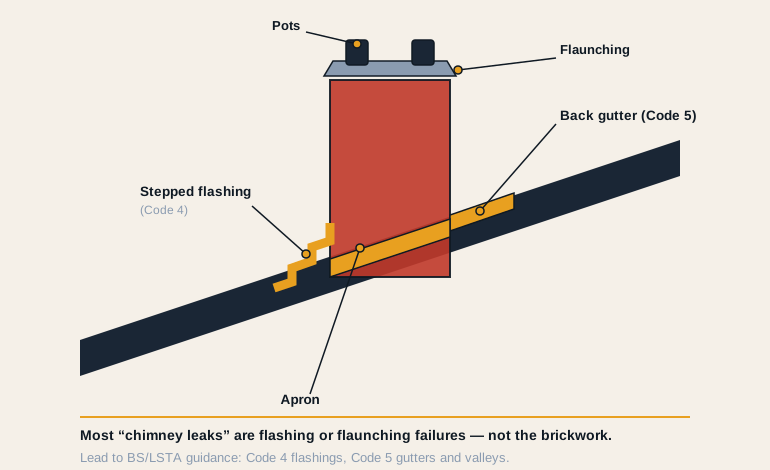
The most common chimney-related call we receive across Reading's older stock is lead flashing failure — the step and apron flashings that seal the joint between chimney and roof slope. On Victorian and Edwardian terraces in Newtown, Katesgrove and the Oxford Road corridor, original lead flashings have frequently been poorly repaired with mortar rather than replaced, causing persistent seepage at the abutment. We strip mortar bodge repairs and install new dressed lead to BSEN 12588 standard.
Pointing failure on chimney stacks is the second most common issue. Frost action and thermal cycling break down standard sand-and-cement pointing in Reading's winters, particularly on north-facing stacks exposed to prevailing weather. We re-point with a lime-based or flexible mortar compound appropriate to the stack age and brick type.
Properties in Caversham Heights and on the Tilehurst ridge are more exposed to wind-driven rain than valley-floor properties, and their chimney stacks tend to deteriorate faster. If your chimney hasn't been inspected in the last five years and your property is in an elevated location, it's worth getting it looked at before the next winter.
“Had a persistent damp patch on the chimney breast that two builders couldn't solve. Reading Roofing went straight to the lead flashing — original mortar-pointed lead that had failed at the step joints. New dressed lead installed and the patch has gone.”
Tom W. · Newtown, Reading RG1
★★★★★
“Chimney repointed and two cracked pots replaced. They used lime mortar appropriate for the Victorian brickwork, which the previous roofer had used cement on (incorrectly). Excellent work.”
Patricia L. · Caversham RG4
★★★★★
“Stack inspection before a house purchase. They produced a clear written report with photos, identified two issues the surveyor hadn't spotted, and quoted for the repairs. Very professional and thorough.”
The chimney repair picture across Reading varies significantly by location. Victorian and Edwardian properties in Newtown, Katesgrove and Caversham account for the majority of chimney work — these properties have 100-to-120-year-old chimney stacks in lime-bonded soft brick, with lead flashings and back gutters at or past end of service life. The suburban semis of Tilehurst, Emmer Green and Wokingham have 1930s-era chimneys on harder modern brick with mortar-bedded lead and haunching that needs attention every 20 to 30 years.
Chimney work in Reading requires a physical inspection from scaffold level — there is no substitute. The pot security, haunching mortar condition, lead flashing integrity and pointing condition are all assessment points that require hands-on access. We do not quote chimney repairs from binoculars or roof-level CCTV. The survey visit determines what is actually needed before a price is agreed.
We carry out all chimney work ourselves — we do not subcontract specialist lead work or pointing to third parties. The roofer who assesses your chimney carries out the repair. This is important for quality control: the person doing the repair knows what they found at survey and can make informed decisions about unexpected findings without a telephone call to a subcontractor.
Call 0118 327 2383 to arrange a free chimney survey anywhere in Reading and Berkshire. Written quote before any work begins.
Do you offer chimney repointing in Reading?
Yes — alongside chimney repairs we offer specialist chimney repointing in Reading, including lime mortar on period stacks, flaunching renewal, cowls and capping.
Chimney faults show as damp on the breast, staining at ceiling level near the stack, or debris in the fireplace — concentrated on Reading's Victorian stacks in Newtown and Caversham and exposed Tilehurst ridge stacks.
Damp patch on the chimney breast, inside or upstairs
Crumbling or missing mortar between the stack bricks
Cracked or missing flaunching (the mortar bed at the top)
Leaning or loose chimney pots
White staining (efflorescence) on the stack brickwork
When it is not the answer: If only the pointing has weathered, repointing is enough — a full rebuild is oversell unless the brickwork itself has spalled and failed. Read the full guide.
We assess the pointing, flaunching, pots, flashings and flue from a safe standing position, not guessed from the ground.
2. Written quote
A clear price naming the mortar spec — lime for pre-1940 Newtown and Caversham stacks — and the scope.
3. Scheduling & scaffold
We book the work and arrange scaffold or a tower as the stack needs.
4. The work
Repointing, flaunching renewal, flashing repair, pot re-set or cowl fitting as agreed.
5. Cleanup & guarantee
Site cleared and the stack left weathertight with a written guarantee.
Timescales
Typical Timescales
Job
Typical duration
Chimney repointing (per stack)
1-2 days
Flaunching renewal
Half a day
Lead flashing renewal
Half to full day
Pot re-set or cowl fitting
2-4 hours
Upper-course rebuild
2-3 days
Lime mortar on period stacks needs dry conditions to cure properly, so we weather-plan pointing on Newtown and Caversham chimneys.
Access
Access, Scaffolding & Permits in Reading
Chimney work always needs proper scaffold or a suitable tower — never ladder work — for safe assessment and repair. Scaffold is specified for: all chimney work — safe standing access to the stack is essential and included in the quote - always itemised in your written quote, never a hidden extra, and we arrange it.
Reading's mix of Victorian terraces in Newtown and Katesgrove and post-war estate housing in Whitley and Lower Earley means access varies from tight terraced frontages to open estate driveways. Pavement scaffold and skip permits go through Reading Borough Council; allow a few working days on streets like Newtown terraces off the Oxford Road, the narrow streets of Katesgrove where space is tight.
Pricing
What Chimney Repairs Costs in Reading
Job
Typical range
Notes
Chimney repointing (per stack)
£150-£800
Scope dependent
Flaunching renewal
£150-£400
Mortar bed at the top
Lead flashing repair
£280-£700
Around the stack
Pot re-set or cowl fitting
£80-£200
Per pot
Chimney capping (redundant flue)
£150-£450
Ventilated cap
Upper-course rebuild
£500-£1,500
Where brick has failed
What moves the price
Stack height and exposure (Tilehurst ridge weathers fastest)
Mortar spec — lime for pre-1940 stacks costs more but is essential
Scaffold access to the stack
Extent of pointing vs full rebuild
Lead flashing renewal alongside
Worked example: Repointing a Victorian stack in Newtown in NHL lime mortar with scaffold access and two pots re-set: around £620 including scaffold.
No deposit on repointing and small chimney repairs. Staged payment on rebuilds. All prices include VAT.
Guarantee
What the 10-Year Guarantee Actually Covers
Chimney workmanship is covered for 10 years in writing; lead and materials carry their own warranties.
Covered: workmanship for 10 years, in writing, transferable if you sell.
On top: manufacturer warranties on materials (terms vary by product).
Not covered: storm or impact damage - that is an insurance matter, and we will document it for your claim.
If a fault appears in covered work, we come back and put it right. No quibbling, no re-charge.
Scaffold to the stack for the duration and some noise during raking-out; we sheet the roof below and clear all debris. You do not need to stay home for external work - we just need power and access agreed in advance.
Runs year-round, but lime mortar pointing needs dry, mild spells to cure; we schedule period-stack work accordingly. Thames Valley humidity and the Kennet and Thames river corridors slow drying and accelerate moss, especially on north-facing slopes.
FAQ
Common Questions
A typical chimney repoint in Reading costs £350–£700 depending on stack height, accessibility and extent of pointing failure. Properties requiring scaffold access cost more than those reachable by ladder. We include a flashing inspection as part of every chimney survey at no extra charge.
Damp patches on the chimney breast wall or ceiling adjacent to the chimney are the most common indicator. Staining on the external stack face, visible gaps in the pointing, cracked or displaced chimney pots, and mortar debris in the fireplace are all signs that the chimney requires inspection.
Yes. We work on period properties in Reading's conservation areas and understand the material constraints that apply. We use appropriate lime mortars on older brick stacks, source matching brick where required, and can advise on whether consent is needed for your specific repair.
Yes. We can cap redundant stacks with a proprietary capping cowl or properly seal the stack top with lead while maintaining the external profile. Full stack removal is also possible where no structural objection exists — we can advise on the implications for the party wall and planning at survey.
Signs from the ground: mortar joints that appear recessed or absent, brick faces spalling, white salt deposits tracking down after rain, any visible lean in the stack. From inside: damp patches on the chimney breast that appear after rain and dry in dry weather. We inspect chimneys free of charge as part of any roofing survey.
Yes. On Victorian and Edwardian properties in Newtown, Katesgrove, and Caversham, lime mortar is the correct specification. Portland cement is harder than the surrounding brickwork and prevents moisture dispersal, causing brick face spalling over time. We use hydraulic lime mixes appropriate to the original mortar strength on all period properties.
Most chimney work on standard Reading terraces and semis is accessible from a working platform as part of a normal scaffold setup. Unusually tall stacks on Caversham Heights villas may need additional lift height. We always include the correct access specification in our quote.
Areas Covered
We Cover All of Reading
Based in Reading, we serve the whole borough and surrounding Berkshire towns. Call 0118 327 2383 to confirm coverage.
Chimney repair in Reading is primarily a specialist job on period stock. The Victorian and Edwardian terraces of Newtown, Katesgrove and Caversham have chimney stacks that are 100 to 120 years old — large, multi-flue stacks built from soft stock brick in lime mortar, with lead step flashings and back gutters that were originally installed when the properties were built. These are not standard flat-rate repairs.
We assess chimney condition from scaffold — the only way to properly examine stack pointing, chimney pot security, lead flashing condition and the haunching mortar around the pot base. A CCTV inspection of the flue interior can be arranged where structural condition is in question, though this is more relevant to active chimney use than to weathertightness.
Pointing specification is critical on period chimneys. The lime-bonded soft brick of Reading's Victorian stock cannot accept Portland cement mortar — the cement is harder than the brick, and moisture trapped between cement repointing and soft brick causes spalling that destroys the brick face. We use NHL 3.5 hydraulic lime mortar on pre-1940 chimneys as standard, and document this in the written quote.
Lead Flashing and Haunching
The most common chimney repair call in Reading is lead flashing failure — specifically, mortar applied over original lead flashings that has dried, cracked, and allowed water into the void behind. The correct repair is stripping the mortar, replacing the lead, and wedging the new lead correctly into the brick joint. This is the fix that stays fixed. Mortar over lead is a temporary solution that fails every one to two thermal cycles.
Haunching mortar — the bedding around chimney pots — typically has a lifespan of 20 to 30 years before cracking. We replace haunching with a correctly specified flexible lime or polymer mortar compound, cut cleanly to allow proper weathering. The alternative, patching cracked haunching with additional mortar, adds weight to already degraded material and fails within two to three years.
Get In Touch
Get Your Free Quote Today
No call-out fees. No obligation. A straight answer from a local Reading roofer.