Rotten fascia and soffit boards allow water into the roof structure and cause gutters to pull away from the house. We replace failing timber with low-maintenance uPVC across Reading and Berkshire — often done in a single day alongside guttering.
Fascia and soffit replacement in Reading costs £280-£2,400 depending on scope, in uPVC or timber. We strip back to sound timber before fitting — no covering over rot — and combine with guttering for best value. Free survey, 10-year guarantee. Call 0118 327 2383.
✓ NFRC Registered
✓ Fully Insured
✓ 10 Year Guarantee
✓ Free Quotes
✓ No Hidden Costs
✓ Family Run Since 2003
Fascia & Soffit Specialists
Fascia, Soffit & Barge Board Replacement in Reading
The fascia, soffit and barge boards protect the critical joint between roof and wall from water ingress and support the guttering system. When original timber fails — as it will on most Reading properties built before 1990 — uPVC replacement is the permanent solution.
Original timber fascia on Reading's 1930s semis, post-war stock and 1960s–70s estates was typically untreated softwood or painted deal. In the UK's damp climate, exposed end grain — particularly at the tops of boards behind the first row of tiles — absorbs water and begins to rot from the inside. By the time rot is visible on the surface, structural degradation is typically well advanced. Properties in tree-lined streets across Caversham, Earley and Woodley are disproportionately affected due to higher shade and ambient moisture.
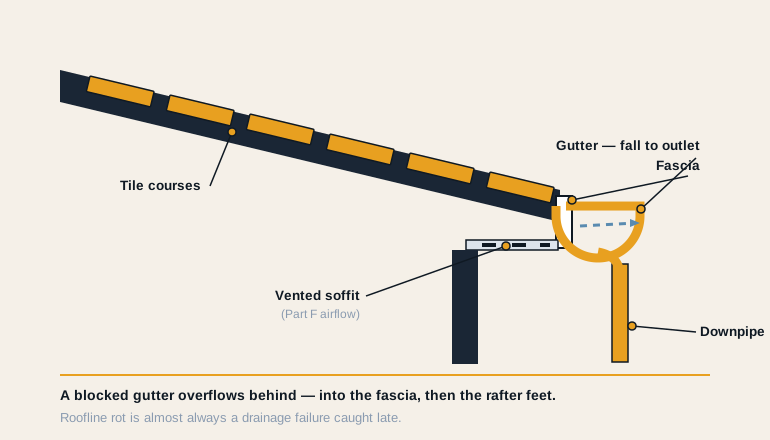
The practical consequence of rotten fascia is that the gutter bracket fixings lose purchase and gutters begin to pull away, overflow or sag. This is frequently the visible trigger for homeowners calling us — but the underlying cause is always the board condition behind the brackets.
uPVC vs Timber: Why We Recommend uPVC
Modern cellular uPVC fascia and soffit boards are dimensionally stable, UV-stabilised and impervious to moisture. They require zero maintenance beyond occasional cleaning. They carry a 10-year product guarantee and realistically outlast the property's next roofing cycle. We cap over or full-strip depending on the condition of the existing boards — full strip to expose the rafter feet for inspection is always recommended when rot is suspected.
“Fascia boards had rotted badly on the rear — the gutters were pulling away. Reading Roofing replaced all of it: fascia, soffit and gutters in one job. Clean finish, vented soffit installed correctly, gutters at the right fall. One day's work.”
Chris P. · Lower Earley, RG6
★★★★★
“Replaced the original 1930s timber fascia all round with uPVC. The difference is dramatic — tight, clean and dry. The original boards were so rotten in places we could push a finger through them. Should have done it years ago.”
Jennifer T. · Tilehurst, RG31
★★★★★
“Had the soffit and fascia done at the same time as the guttering. Good value when it's all done together. They finished in one day, left the place tidy. Straight forward from quote to completion.”
Guttering fails quietly until water starts running down the wall or into the roofline — most Reading calls follow autumn leaf fall on the tree-lined roads of Caversham, Woodley and Emmer Green.
Water overflowing the gutter edge in rain
Water running down the external wall (staining, green algae)
Sagging gutter sections or gaps at the joints
Damp appearing at the top of an internal wall
Plants growing out of the gutter
When it is not the answer: If the guttering is sound and simply blocked, a clean is all you need — replacing serviceable guttering is oversell. If the fascia behind is rotten, though, address the roofline together. Read the full guide.
Cross-section: Guttering — technical detail. Diagram: Reading Roofing Experts.The process
What to Expect: Guttering in Reading
1. Free survey
We check the gutters, joints, brackets, downpipes and the fascia behind for rot.
2. Written quote
A clear price for clearing, repair, or replacement — with an honest steer on which you actually need.
3. Scheduling
We book the work, usually completed in a day per elevation.
4. The work
We clear, repair or replace as agreed, correct the falls so water drains to the outlets, and flush the downpipes.
5. Cleanup & sign-off
Debris cleared and a workmanship guarantee on any replacement.
Timescales
Typical Timescales
Job
Typical duration
Gutter clearing (full house)
2-4 hours
Gutter repair / rehang section
Half a day
Full guttering replacement (semi)
1 day
Full roofline (fascia, soffit, gutter)
1-2 days per elevation
Downpipe replacement
2-4 hours
Guttering work runs year-round; heavy rain simply makes the diagnosis easier by showing exactly where the overflow is.
Access
Access, Scaffolding & Permits in Reading
Gutter work runs from ladders or a tower on most Reading houses; two and three-storey terraces may need a tower or short scaffold for safe access. Scaffold is specified for: three-storey terraces, or full roofline replacement where working time at height is extended - always itemised in your written quote, never a hidden extra, and we arrange it.
Reading's mix of Victorian terraces in Newtown and Katesgrove and post-war estate housing in Whitley and Lower Earley means access varies from tight terraced frontages to open estate driveways. Pavement scaffold and skip permits go through Reading Borough Council; allow a few working days on streets like Newtown terraces off the Oxford Road, the narrow streets of Katesgrove where space is tight.
Pricing
What Guttering Costs in Reading
Job
Typical range
Notes
Gutter clearing (standalone)
£80-£150
Incl. downpipe flush
uPVC guttering (per metre fitted)
£100-£150
Half-round or square
Fascia capping over sound timber
£60-£90
Per metre
Full roofline — semi
£1,500-£4,000
Fascia, soffit, gutter
Full roofline — detached
£3,000-£6,000
Larger perimeter
Cast-iron-profile uPVC (per metre)
£130-£180
Period-property match
What moves the price
Length of guttering / roofline
Number of storeys and access
Whether the fascia timber is sound (cap) or rotten (replace)
Profile (standard vs cast-iron-match for period stock)
Downpipe runs and drainage corrections
Worked example: A full uPVC roofline on a Woodley semi with Part F soffit ventilation, straightforward driveway access: around £2,400 including old-material removal.
No deposit on gutter cleaning or small repairs. Staged payment on full roofline jobs when materials arrive. All prices include VAT.
Guarantee
What the 10-Year Guarantee Actually Covers
Replacement guttering and roofline carry a 10-year workmanship guarantee; the uPVC itself carries a manufacturer warranty on top.
Covered: workmanship for 10 years, in writing, transferable if you sell.
On top: manufacturer warranties on materials (terms vary by product).
Not covered: storm or impact damage - that is an insurance matter, and we will document it for your claim.
If a fault appears in covered work, we come back and put it right. No quibbling, no re-charge.
External-only work, no need to be home — just clear access to the perimeter and any locked side gates left open. You do not need to stay home for external work - we just need power and access agreed in advance.
Runs in all but the worst weather; a wet day actually helps confirm the overflow points before we start. Thames Valley humidity and the Kennet and Thames river corridors slow drying and accelerate moss, especially on north-facing slopes.
FAQ
Fascia & Soffit Questions
A standard 3-bed semi in Reading typically costs £900–£1,600 for a full fascia, soffit and barge board replacement in uPVC, including removal of the old timber boards. Larger detached properties with more complex rooflines range from £1,500–£3,000+. We provide free surveys and written quotes.
Technically yes, but it's rarely worthwhile. Fascia replacement requires removing the existing guttering to access the boards. Since the guttering is already down, replacing aging or damaged gutter sections at the same time costs a fraction of what a separate gutter job would cost and avoids a second scaffolding or ladder setup visit.
Soft or spongy texture when pressed, visible rot or delamination, gutters pulling away from the fascia under their own weight, or paint that peels repeatedly despite repainting are all reliable indicators. On Reading's older housing stock — 1930s and post-war properties — original timber fascia and soffit are now 60–90 years old and replacement with uPVC is generally more cost-effective than repeated repair.
No. This is the primary advantage over timber. uPVC fascia, soffit and barge boards require no painting, no preservative treatment and no regular maintenance. An occasional wash-down with soapy water is all that's needed. Modern uPVC is UV-stabilised and fade-resistant — a quality installation will perform well for 25–35 years.
Signs of deterioration on timber fascia: paint peeling in sheets, soft or spongy areas, visible rot at joints and corners, gutters pulling away from the fascia. Damaged soffits often allow birds and bats to nest in the roof void — a secondary problem avoided by replacing before gaps develop.
For like-for-like replacement on a standard residential property, no planning permission is required. On listed buildings or in conservation areas in Newtown and central Caversham, material changes from original timber to uPVC may require consent. We advise on any planning considerations at survey.
Yes — and this is usually the most cost-effective approach. If the fascia is failing, the gutter is coming off anyway to replace it. Doing both at the same visit eliminates a return scaffold setup cost. We routinely quote fascia, soffit and guttering as a combined package.
Our Approach
Fascia and Soffit Replacement in Reading
Fascia and soffit replacement across Reading's post-war estate housing is one of the most common whole-house maintenance jobs we carry out. The 1970s and 1980s timber fascias on estates across Woodley, Earley, Whitley and Southcote were typically painted softwood — a material that performs adequately when properly maintained but deteriorates rapidly when paint is allowed to fail at joints and bracket fixings. By the time the deterioration is visible from the ground — peeling paint, swollen timber, gutters pulling away — the rot has typically penetrated significantly further than the surface suggests.
We take down the existing guttering before removing fascia boards, which allows a full assessment of the rafter feet and wall plate behind. Rotten rafter feet are replaced at this stage — fixing new fascia boards to rotten timber simply re-creates the problem. New uPVC capping boards are fitted over the rafter feet and fixed securely before new guttering is hung on new brackets. The work is clean and typically complete within a day per elevation.
On period properties in Newtown, Caversham and the conservation area streets, original timber fascias may need to be replaced in timber rather than uPVC to maintain character or meet planning requirements. Where timber replacement is appropriate, we use pre-treated hardwood and advise on the correct paint system for the specific exposure of the elevation.
Combining Fascia and Gutter Work
There is a strong case for combining fascia, soffit and gutter replacement in a single visit whenever the fascia is being renewed. The guttering comes off anyway to allow fascia replacement — so the incremental cost of replacing the guttering at the same time is just the cost of new gutter sections and fittings. The labour and scaffold costs are shared. Fitting new guttering to new fascia boards at the same time also gives a cleaner installation than retrofitting guttering to a newly completed fascia.
We price fascia, soffit and gutter combined packages on request and find that most clients choose to combine once they understand the economics. The price uplift for adding guttering to a fascia replacement is typically 20 to 30 percent of the total cost, against a two- to three-year extension in gutter lifespan from starting from a clean, correctly hung installation.
Get In Touch
Free Quote — No Obligation
No call-out fees. A straight answer from a local roofer who knows Reading.