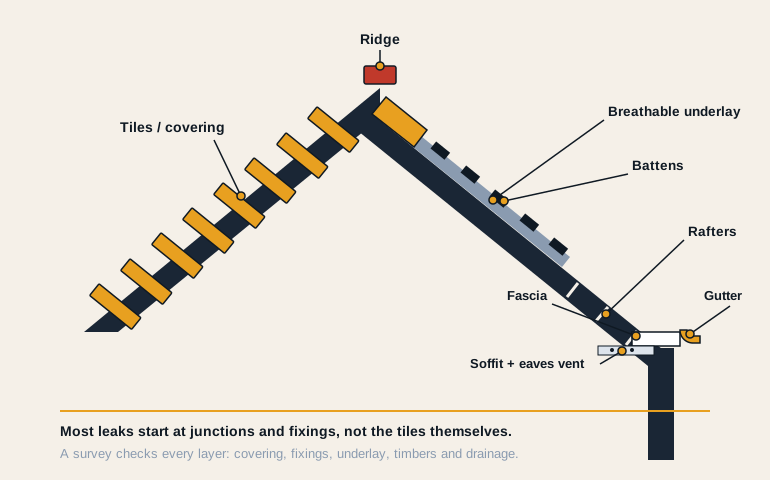
Woodley's 1960s–70s concrete tile estate roofs are generating significant repair demand as they reach 50–60 years of age. We know the nail sickness patterns, the ridge mortar failures and the flat garage roof problems across RG5.
Woodley's large residential estates — built primarily on the Sandy Lane and Headley Road corridors from the mid-1960s to mid-1980s — are now at the age where roofing issues occur with increasing frequency. The dominant issue is nail sickness: the original mild steel cut nails used to fix Marley Ludlow Major and similar concrete interlocking tiles have corroded after 40–60 years of wet winters. Affected tiles are held by contact only, not fixings.
The appropriate repair depends on the extent of nail failure. Where it's localised to one or two roof slopes, targeted tile removal and re-fixing with new screws or clips is cost-effective. Where more than 20–25% of the roof area shows widespread nail failure, phased re-roofing is more economical. We assess and advise honestly — we won't recommend re-roofing when repairs will adequately extend the roof's life.
Ridge mortar failures across Woodley's estate stock are equally widespread. The mortar beds used to bed ridge tiles in the 1960s–70s builds are the same age as the tile fixings and failing on a similar timeline. Ridge re-bedding in flexible mortar or conversion to dry-fix is the recommended repair for Woodley's estate housing.
“Nail sickness on our Sandy Lane semi — they assessed the extent properly and recommended targeted repairs rather than a full re-roof. Honest and competent. The repair has held.”
Dave M. · Sandy Lane, Woodley RG5
★★★★★
“Ridge tiles had been moving for a couple of years. Re-bedded in flexible mortar in one morning. Fair quote, turned up when they said, charged what they quoted.”
Phil K. · Headley Road, Woodley RG5
★★★★★
“Flat garage roof leaking — GRP replacement, one day's work, no more leaks. Exactly what they said it would be.”
Sue T. · Woodley, RG5
Honest advice
Do You Actually Need Roof Repairs?
Most Reading roof problems announce themselves indoors first — a stain, a drip, a patch of damp — long before the cause is visible from the ground. The trick is tracing the symptom back to the actual fault.
A damp patch or brown stain on an upstairs ceiling after rain
A slipped, cracked or missing tile visible from the ground
Water tracking down a chimney breast or around a rooflight
Debris (mortar, tile fragments) in the gutters or on the drive
Daylight visible through the roof from inside the loft
When it is not the answer: If more than about a third of the covering has failed — widespread nail sickness on a 1960s-70s Whitley or Southcote estate roof, for instance — repairing tile-by-tile is money wasted. Read the full guide.
We inspect from roof level, lift sample tiles to check the fixings and underlay, and trace the leak to its real source — not the nearest visible symptom.
2. Written itemised quote
You get a fixed, written price naming the fault, the fix and the guarantee — no lump-sum guesswork.
3. Scheduling
We agree a date; for common faults we carry matching materials to fix on the first visit.
4. The repair
We carry out the work, document any hidden damage found with photos, and make the roof weathertight.
5. Cleanup & sign-off
We clear debris, leave the site tidy, and hand over the written workmanship guarantee.
Timescales
Typical Timescales
Job
Typical duration
Slipped or cracked tile refix
1-2 hours
Lead flashing repair
Half a day
Section of nail-sick tiles refixed
Half to full day
Rear valley rebuild
1-2 days
Chimney flashing renewal
1 day
Wet or high-wind days pause tiling and lead work — we build weather margin into every booking and never leave a roof open overnight.
Access
Access, Scaffolding & Permits in Woodley
Most Reading repairs run from roof ladders or a tower; scaffold is quoted only where the job needs safe standing time at height. Scaffold is specified for: chimney-side repairs, full valley rebuilds, ridge work on exposed Tilehurst and Caversham Heights streets, or anything beyond a day at height - always itemised in your written quote, never a hidden extra, and we arrange it.
Woodley is dominated by post-war and 1960s-80s estate housing with generous driveways, so most scaffold access is straightforward, though tree-lined roads need care. Pavement scaffold and skip permits go through Wokingham Borough Council; allow a few working days on streets like the estate roads off Woodley centre where space is tight.
Pricing
What Roof Repairs Costs in Reading
Job
Typical range
Notes
Slipped or cracked tile refix
£150-£300
Per visit incl. access
Lead flashing repair / renewal
£280-£800
Chimney or abutment
Section of nail-sick tiles refixed
£300-£600
Signals wider issue
Valley renewal
£400-£1,200
Depending on length
Ridge repointing (per run)
£300-£1,000
Exposed stock weathers faster
Emergency make-safe call-out
£150-£450
Same-day, stated up front
What moves the price
Roof height and access (bungalow vs three-storey terrace)
Whether the tile needs matching (clay in Newtown/Caversham costs more than concrete)
Scaffold vs tower vs ladder for the specific fault
How far the leak has tracked before it was caught
Hidden timber rot found once tiles are lifted
Worked example: A rear valley rebuild on a 1930s semi off the Wokingham Road, concrete tile, tower access: around £680 including access and waste removal.
No deposit on repairs under £500. Staged payments on larger jobs — nothing up front before materials are on site. All prices include VAT.
Guarantee
What the 10-Year Guarantee Actually Covers
Workmanship on the repaired section is covered for 10 years in writing; any replacement tiles and lead carry manufacturer warranties on top.
Covered: workmanship for 10 years, in writing, transferable if you sell.
On top: manufacturer warranties on materials (terms vary by product).
Not covered: storm or impact damage - that is an insurance matter, and we will document it for your claim.
If a fault appears in covered work, we come back and put it right. No quibbling, no re-charge.
Covering RG5 and surrounding postcodes.
Good to know
What It Is Like While We Work
A day of ladder or tower work and a small amount of tile debris — we sheet below the work area and clear everything before we leave. You do not need to stay home for external work - we just need power and access agreed in advance.
Repairs run year-round; temporary weatherproofing goes on the same day if rain stops work mid-job. Mature street trees across Woodley drop heavy leaf fall into valleys and gutters every autumn.
FAQ
Common Questions
You may notice tiles that rock slightly when the roof is viewed from above or that have displaced after wind events. From inside the loft, look for tiles that have slipped out of alignment — light showing through gaps in dry conditions. A survey will identify the extent. Call 0118 327 2383 to arrange a free inspection.
It depends on the extent of nail failure and the condition of the underlay and battens. For many Woodley properties, targeted repair can extend the roof's life by 10+ years at a fraction of replacement cost. We'll give you an honest assessment on survey.
Ridge repointing on a standard Woodley semi runs £300–£600 depending on ridge length. Individual tile re-bedding costs £150–£280. Dry-fix ridge conversion costs £500–£900 for a typical semi. Free quotes.
Yes. Same-day emergency attendance for storm damage and active leaks across Woodley. Call 0118 327 2383.
Most Woodley properties from the 1980s were roofed with Marley Ludlow Major, Redland 49, or similar concrete interlocking profiles. For repairs we source matching concrete interlocking tiles — ideally the same manufacturer and profile to ensure correct seating and avoid water traps.
Minor repairs — a few slipped tiles, a small section of failed ridge mortar — typically cost £150 to £400. More involved work such as valley replacement or chimney flashing renewal runs £400 to £900. All prices include materials and labour. We provide a written quote before any work starts.
For straightforward tile work on a standard two-storey Woodley semi, a properly anchored ladder is sufficient for small repairs. More involved work requiring extended time at height requires a scaffold tower. We specify the correct access method in our quote.
Why Woodley Specifically
Roof Repairs in Woodley — Local Conditions
Woodley occupies a broadly level plateau south-east of Reading at 50 to 70 metres above sea level, sheltered from the south-west by the lower Loddon valley. Wind exposure is moderate, and rainfall is typical of inland Berkshire. The main climate factor affecting Woodley roofs is the mature tree canopy across the 1970s–80s estate roads — established conifers and deciduous trees on roads like Headley Road, Hurricane Way and Mohawk Way deposit significant debris into valleys and gutters each autumn.
Woodley's housing stock is predominantly 1970s to 1990s detached and semi-detached, built during the M4 corridor expansion phase. The dominant tile is concrete interlocking — Marley Ludlow Major and Redland 49 on the 1970s stock, transitioning to modern profiles on 1990s development. These properties are now 35 to 55 years old, placing the oldest sections firmly in the nail sickness risk window. Flat-roofed integral garages and rear extensions from the original build phase are a significant feature across the estate roads.
For roof repairs work in Woodley, this translates directly into how we approach the job. The most common issues in Woodley are concrete tile nail fatigue on the 1970s–80s stock, flat roof felt failure on original-build garages, and gutter blockage from the mature tree canopy. Properties on the older estate roads — particularly those built before 1978 — are at the highest nail sickness risk and represent the majority of our re-roof survey requests from this postcode. These are not issues we encounter occasionally — they are the characteristic call types from the RG5 postcode and our teams have the materials and experience to address them correctly on the first visit.
Late summer through autumn is peak demand for Woodley surveys — homeowners noticing tiles lifting after summer heat movement, before the winter storm season begins. Gutter blockages peak in October and November. Knowing this seasonal pattern means we can give you a realistic timeline for booking work in Woodley — and advise you if your situation warrants treating the job as more urgent.
Free survey in Woodley RG5 — call 0118 327 2383 to arrange. No call-out fee, written quote before any work starts.
How We Approach Roof Repairs
Every roof repair we carry out begins with a physical inspection from roof level — not a visual assessment from the ground. We lift sample tiles to check nail and batten condition, probe mortar for hidden deterioration, and physically test lead flashings for movement. This takes longer than a pavement-level quote but it means the repair addresses the actual cause rather than the visible symptom.
We provide a written, itemised quote before any work starts. The quote specifies what will be done, what materials will be used by name and grade, and what the workmanship guarantee covers. We do not begin work until you have accepted the quote in writing. There are no verbal agreements on price that can be reinterpreted later.
For repairs on occupied properties, we confirm the programme the morning of the work and leave the property weathertight each day before we depart. If a repair identifies additional underlying issues — degraded felt underlay visible once tiles are lifted, rotten batten sections — we photograph the finding and discuss options before proceeding. No hidden extras.
Materials and Specification
Material matching is the most important technical decision on any roof repair. Replacing a clay plain tile with a concrete interlocking tile — or the wrong clay profile — creates drainage problems at the junction and is visually obvious from the street. We hold matching stock for the most common Reading tile profiles and source less common profiles from specialist suppliers within 24 to 48 hours.
For mortar-bedded elements — ridge tiles, verge details, chimney haunching — we use a flexible polymer-modified mortar on post-1950 properties, and lime-based mortar on pre-1940 properties where the original brickwork requires it. Using cement-based mortar on lime-bonded Victorian brickwork causes spalling; this is one of the most common causes of deterioration we find on Newtown and Katesgrove terraces that have been previously worked on by contractors unfamiliar with period materials.
Get In Touch
Free Quote — No Obligation
No call-out fees. A straight answer from a local roofer who knows Woodley.