A clear breakdown of roof repair costs across Reading — from a single slipped tile to a full valley or lead flashing renewal — with the local factors that move the price. No call-out fee, written quotes before any work.
Roof repairs in Reading typically cost £150-£900 depending on the fault. A slipped or cracked tile runs £150-£300, lead flashing repair £280-£800, valley renewal £400-£1,200, and ridge repointing £300-£1,000. Access, roof height and material matching drive the final price. Free survey, no call-out fee.
✓ NFRC Registered
✓ Fully Insured
✓ 10 Year Guarantee
✓ Free Quotes
✓ No Hidden Costs
✓ Family Run Since 2003
How It Works
What Determines a Roof Repair Price
Roof repair pricing comes down to three things: access, materials, and the time on the roof. A slipped tile within ladder reach on a bungalow is a quick, low-cost fix. The same tile at the ridge of a three-storey Newtown terrace needs scaffold or a tower, which can cost more than the repair itself. This is why a genuine repair price can only be given after seeing the property — a phone quote is guesswork.
Material matching adds cost on Reading's period stock. Replacing a modern concrete tile is cheap and the tile is held in stock. Matching a Victorian clay plain tile in Newtown or Katesgrove, or an original Welsh slate in Caversham Heights, means sourcing from specialist suppliers and sometimes reclamation yards — the material itself can cost several times a standard tile, and sourcing adds a day or two to the timeline.
The nature of the fault matters more than its visible size. A single damp patch on a bedroom ceiling can trace to a £200 flashing repair or a £1,200 valley renewal — the visible symptom rarely reveals the scale of the cause. A proper repair diagnosis follows the water path back from the internal damp to the actual entry point, which is why we inspect from roof level rather than quoting from the ground.
Local Knowledge
Roof Repair Costs Across Reading
The most common repair we're called to in Reading is nail sickness on the post-war estates — Whitley, Southcote, Woodley and Lower Earley. On these 1958-1990 concrete tile roofs, corroded iron nails let tiles slip individually or in sections. A single tile refix runs £150-£250; a slipped section of eight to twelve tiles indicates advanced nail fatigue and costs £300-£600 to refix, though at that point a re-roof survey is worth doing because the problem will keep recurring across the roof.
On the Victorian and Edwardian terraces of Newtown, Katesgrove and Caversham, the characteristic repair is lead flashing failure on the shared chimney stacks. Where a previous contractor has patched flashing with mortar — which cracks within a winter or two — the permanent fix means stripping the mortar and replacing the lead, £280-£800 depending on the stack. Clay tile matching for slipped or cracked tiles on this stock adds material sourcing cost that concrete-tile estates don't face.
The exposed ridge areas — the Tilehurst ridge streets around Norcot Road and School Road, plus Emmer Green and Caversham Heights — generate ridge mortar repairs. After 80-90 years of weather exposure at elevation, mortar-bedded ridges crack along their length. Repointing a ridge run costs £300-£1,000; converting to maintenance-free dry-fix costs more upfront but eliminates the recurring cost on these weather-hit properties. Valley blockages and failures are common across the tree-canopied roads of Caversham and Woodley, especially after autumn.
Diagnosis
Why Accurate Diagnosis Saves Money on Reading Repairs
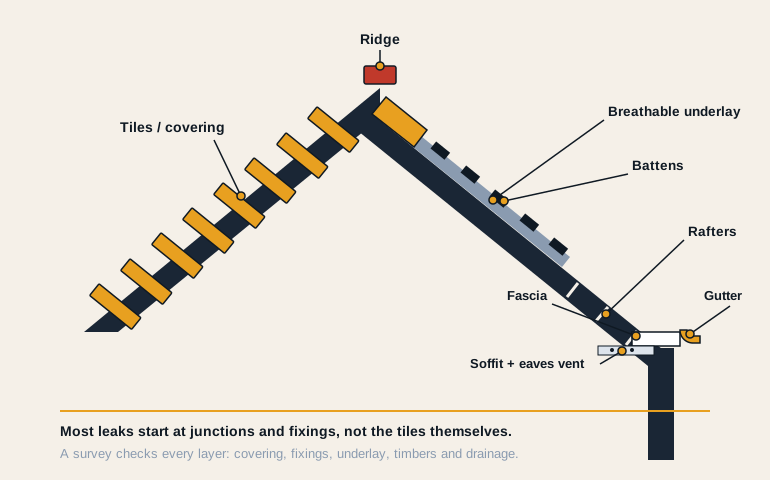
The most expensive roof repair is the wrong one. A damp patch on a ceiling gets 'fixed' three times by three different people — each replacing a tile, each charging, each failing — because none of them traced the water back to its actual entry point. Water travels along battens and rafters before it drops, so the internal stain is often a metre or more from the real defect. Accurate diagnosis, following the water path back from roof level, is what turns a repeat-visit money pit into a single permanent fix. This is why we inspect properly rather than replacing the nearest tile and hoping.
On Reading's specific stock, certain symptoms point reliably to certain causes, and knowing them speeds diagnosis. A damp patch beside a chimney on a Newtown or Katesgrove terrace is almost always lead flashing failure, not a tile. Recurring slips after every windy spell on a Whitley or Southcote estate roof point to nail sickness, not isolated damage. A stain that appears only in prolonged heavy rain, in a valley or against an abutment, indicates a lining or flashing failure rather than a surface defect. Recognising these patterns from experience of the local housing means we diagnose faster and quote accurately.
The repair-versus-replace calculation is where honest advice matters most on cost. A single fault on an otherwise sound roof is always worth repairing. But when the same roof generates repeated call-outs — as ageing concrete tile estates increasingly do — the cumulative cost of repairs plus the disruption starts to exceed the value of a planned re-roof. We tell Reading homeowners honestly where their roof sits on that curve, because stringing along a failing roof with repeated paid repairs serves us in the short term but not the customer, and the customers who trust that honesty are the ones who come back and recommend us.
Finally, the timing of a repair affects its cost in Reading's climate. A small defect caught early — a single slipped tile, a hairline flashing gap — is a low-cost fix before water gets in. Left through a Thames Valley winter, that same defect lets water track into the timber and ceilings, turning a £200 repair into a job involving timber replacement and internal making-good running into four figures. Acting on the early signs, rather than waiting until a ceiling stains, is the single biggest thing a homeowner can do to keep repair costs down.
Pricing
Roof Repair Price Guide — Reading 2026
Slipped or cracked tile (single)
£150 – £300
Section of tiles refixed (nail sickness)
£300 – £600
Lead flashing repair / renewal
£280 – £800
Valley renewal
£400 – £1,200
Ridge repointing (per run)
£300 – £1,000
Chimney flashing repair
£280 – £700
Emergency make-safe call-out
£150 – £450
Indicative 2026 ranges for Reading. No call-out fee for standard surveys. Every repair is quoted in writing after inspection — figures include VAT.
British Standard BS 5534, the Code of Practice for slating and tiling, sets the fixing specifications that a compliant repair must meet — which is why correctly refixing nail-sick tiles on Reading's concrete estates requires the right gauge fixings and battens, not simply pushing slipped tiles back into place.
Not sure what's causing your leak or how much it'll cost? A free survey diagnoses the actual fault and gives you a written price — no call-out fee.
“Chimney had been leaking for two years and two previous roofers just slapped mortar over it. These guys stripped it back, replaced the lead properly, and it's been bone dry since. £480, done in a morning.”
Michael R.
Newtown · Lead flashing repair
★★★★★
“Tiles kept slipping after every bit of wind. Turned out to be nail sickness. They refixed the worst slope and were honest that the whole roof would need doing in a few years — no hard sell.”
Linda H.
Southcote · Tile refix
★★★★★
“Valley was overflowing into the loft. Fixed same day, showed me photos of the old lining vs the new. Fair price and no call-out charge for coming to look.”
Andrew K.
Caversham · Valley renewal
Honest advice
Do You Actually Need Roof Repairs?
Most Reading roof problems announce themselves indoors first — a stain, a drip, a patch of damp — long before the cause is visible from the ground. The trick is tracing the symptom back to the actual fault.
A damp patch or brown stain on an upstairs ceiling after rain
A slipped, cracked or missing tile visible from the ground
Water tracking down a chimney breast or around a rooflight
Debris (mortar, tile fragments) in the gutters or on the drive
Daylight visible through the roof from inside the loft
When it is not the answer: If more than about a third of the covering has failed — widespread nail sickness on a 1960s-70s Whitley or Southcote estate roof, for instance — repairing tile-by-tile is money wasted. Read the full guide.
We inspect from roof level, lift sample tiles to check the fixings and underlay, and trace the leak to its real source — not the nearest visible symptom.
2. Written itemised quote
You get a fixed, written price naming the fault, the fix and the guarantee — no lump-sum guesswork.
3. Scheduling
We agree a date; for common faults we carry matching materials to fix on the first visit.
4. The repair
We carry out the work, document any hidden damage found with photos, and make the roof weathertight.
5. Cleanup & sign-off
We clear debris, leave the site tidy, and hand over the written workmanship guarantee.
Timescales
Typical Timescales
Job
Typical duration
Slipped or cracked tile refix
1-2 hours
Lead flashing repair
Half a day
Section of nail-sick tiles refixed
Half to full day
Rear valley rebuild
1-2 days
Chimney flashing renewal
1 day
Wet or high-wind days pause tiling and lead work — we build weather margin into every booking and never leave a roof open overnight.
Access
Access, Scaffolding & Permits in Reading
Most Reading repairs run from roof ladders or a tower; scaffold is quoted only where the job needs safe standing time at height. Scaffold is specified for: chimney-side repairs, full valley rebuilds, ridge work on exposed Tilehurst and Caversham Heights streets, or anything beyond a day at height - always itemised in your written quote, never a hidden extra, and we arrange it.
Reading's mix of Victorian terraces in Newtown and Katesgrove and post-war estate housing in Whitley and Lower Earley means access varies from tight terraced frontages to open estate driveways. Pavement scaffold and skip permits go through Reading Borough Council; allow a few working days on streets like Newtown terraces off the Oxford Road, the narrow streets of Katesgrove where space is tight.
Pricing
What Roof Repairs Costs in Reading
Job
Typical range
Notes
Slipped or cracked tile refix
£150-£300
Per visit incl. access
Lead flashing repair / renewal
£280-£800
Chimney or abutment
Section of nail-sick tiles refixed
£300-£600
Signals wider issue
Valley renewal
£400-£1,200
Depending on length
Ridge repointing (per run)
£300-£1,000
Exposed stock weathers faster
Emergency make-safe call-out
£150-£450
Same-day, stated up front
What moves the price
Roof height and access (bungalow vs three-storey terrace)
Whether the tile needs matching (clay in Newtown/Caversham costs more than concrete)
Scaffold vs tower vs ladder for the specific fault
How far the leak has tracked before it was caught
Hidden timber rot found once tiles are lifted
Worked example: A rear valley rebuild on a 1930s semi off the Wokingham Road, concrete tile, tower access: around £680 including access and waste removal.
No deposit on repairs under £500. Staged payments on larger jobs — nothing up front before materials are on site. All prices include VAT.
Guarantee
What the 10-Year Guarantee Actually Covers
Workmanship on the repaired section is covered for 10 years in writing; any replacement tiles and lead carry manufacturer warranties on top.
Covered: workmanship for 10 years, in writing, transferable if you sell.
On top: manufacturer warranties on materials (terms vary by product).
Not covered: storm or impact damage - that is an insurance matter, and we will document it for your claim.
If a fault appears in covered work, we come back and put it right. No quibbling, no re-charge.
A day of ladder or tower work and a small amount of tile debris — we sheet below the work area and clear everything before we leave. You do not need to stay home for external work - we just need power and access agreed in advance.
Repairs run year-round; temporary weatherproofing goes on the same day if rain stops work mid-job. Thames Valley humidity and the Kennet and Thames river corridors slow drying and accelerate moss, especially on north-facing slopes.
FAQ
Common Questions
A single slipped or cracked tile typically costs £150-£300 in Reading, depending on access and whether the tile needs matching. On a bungalow within ladder reach it's at the lower end; on a three-storey terrace needing scaffold, higher. Matching a Victorian clay tile costs more than a standard concrete tile.
Repair quotes vary because of access assumptions, whether scaffold is included, and material matching. A quote given over the phone without seeing the roof is guesswork. Always get a written quote after a physical inspection so you're comparing the same scope — and check whether access and materials are included.
Lead flashing repair costs £280-£800 in Reading depending on the chimney or abutment. The permanent fix strips any old mortar patches and fits new code 4 or 5 lead wedged into the brick joint. This is common on Newtown, Katesgrove and Caversham Victorian terraces with shared chimney stacks.
No — we don't charge a call-out fee for standard roof surveys and repair quotes across Reading. You get a free inspection from roof level and a written quote before any work. Emergency make-safe call-outs are quoted separately and stated upfront when you call.
A single slipped tile is worth refixing. But if tiles are slipping in sections across a 1958-1990 concrete tile roof in Whitley, Southcote or Lower Earley, the nail sickness is a whole-roof problem — repeated repairs cost more over time than a re-roof. We'll give you an honest assessment of which makes sense for your property.
For common faults where we carry matching materials — concrete tiles, code 4/5 lead, valley lining — we often complete the repair on the first visit. Period clay tile or slate matching may add 24-48 hours for sourcing. Emergency make-safe response is same-day across all Reading postcodes.
Yes. All our repair work carries a written workmanship guarantee. Lead flashing repairs carry a 5-year guarantee. We stand behind the work — if a repair we carried out fails within the guarantee period, we return and put it right at no cost.