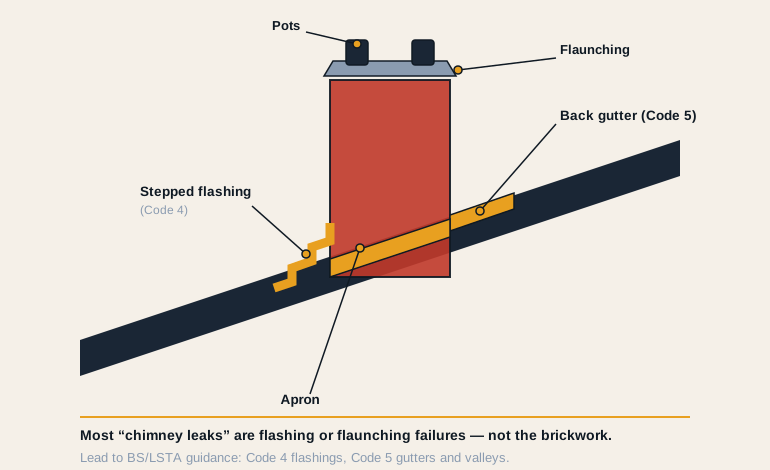
Whitley's estate chimney stacks are later concrete-era brick suited to standard mortar repointing. Weathered pointing here lets water into the breast, so we repoint and re-flaunch across Whitley's estate housing.
Chimney Repointing in Whitley from Reading Roofing Experts: Whitley's estate chimney stacks are later concrete-era brick suited to standard mortar repointing. We cover 1958-72 concrete-tile estate housing — the epicentre of nail sickness in the borough and the surrounding RG2 area with free quotes, no call-out fee and a 10-year guarantee. Call 0118 327 2383.
✓ NFRC Registered
✓ Fully Insured
✓ 10 Year Guarantee
✓ Free Quotes
✓ No Hidden Costs
✓ Family Run Since 2003
Local knowledge
Chimney Repointing in Whitley
Whitley RG2 is dominated by 1958-72 council and social concrete-tile estate housing in south Reading. It is the epicentre of nail sickness in the borough — original iron-nailed concrete tile now 50-65 years old — alongside flat-roofed garages and maisonette sections at or beyond end of life. For chimneys, the age and exposure of the stock decides the work. Weathered pointing lets water track down the breast and shows as damp inside; on the older Whitley stacks the correct mortar is essential, and we specify NHL lime on any pre-1940 brickwork rather than a cement mix that would trap moisture and spall the soft brick. We assess and repoint from proper scaffold or a suitable tower — never ladder work at a stack — raking the failed joints back to a sound depth and repointing to match the original profile, then renewing the flaunching that usually fails alongside. On Whitley's roofs we check the pots, flashings and flue at the same time, so you are not back up the same scaffold for a separate job a season later. Every repoint leaves the stack weathertight with a written workmanship guarantee, and correctly applied lime mortar outlasts the pointing it replaces.
Common faults in Whitley
What We See Most on Whitley Roofs
On Whitley's estate roofs the recurring issues are age-defining: endemic nail sickness on the original iron-nailed 1958-72 concrete tile, flat-roofed garages and maisonette sections at end of life, and lead flashings repeatedly patched with mortar rather than renewed. Knowing the pattern for Whitley specifically means we diagnose faster and quote more accurately — we are rarely surprised by what a Whitley roof throws up, because we have worked on the same stock many times over.
Mortar Science
Why the Mortar Choice Makes or Breaks a Reading Stack
The single most consequential decision in chimney repointing is the mortar, and on Reading's period stock getting it wrong causes damage worse than the original problem. Victorian and Edwardian chimneys in Newtown, Katesgrove and Caversham were built in soft stock brick bedded in lime mortar, and lime mortar has a specific virtue: it's softer than the brick and slightly permeable, so it lets the wall breathe and it sacrifices itself rather than the brick when there's movement or moisture. Repointing these stacks in modern cement mortar — harder and impermeable than the brick — reverses that relationship destructively.
What cement does to a soft-brick stack is force the moisture that would have evaporated through the mortar to exit through the brick face instead, where it brings dissolved salts and freeze-thaw expansion that spall the brick — blowing the face off it in flakes. Within a few years of a cement repoint, a Victorian Reading stack that was merely in need of repointing can be structurally damaged, its bricks crumbling. This is one of the most common and most avoidable failures we're called to correct, and it's why we use NHL hydraulic lime mortar on all pre-1940 stacks as an absolute standard rather than a preference.
On the inter-war and post-war stacks — the 1930s semis of Tilehurst and Emmer Green, the estate housing — the harder brick tolerates cement mortar without the spalling risk, so the mortar choice is less critical there. But the exposure question still governs the work: elevated, weather-facing stacks on the Tilehurst ridge and the Caversham Heights plateau take punishment that sheltered valley stacks don't, failing on the prevailing-weather face first. Recognising which stacks need lime, which tolerate cement, and which faces fail first is the local knowledge that separates a repoint that lasts thirty years from one that fails or damages the stack.
Chimney pointing crumbling or pots looking loose? A free survey from scaffold level tells you exactly what the stack needs — and we point period stacks in the right lime mortar.
“Repointed our chimney in Whitley that had been letting damp into the bedroom. Used lime mortar on the old brick, scaffolded properly, and left it spotless. Damp has gone.”
Laura C. · Whitley
★★★★★
“Had the stack repointed and flaunching renewed on our 1958-72 concrete-tile estate housing — epicentre of nail sickness in borough house. Clear written quote, no surprises, and they did the flashings at the same time so no second scaffold.”
Simon E. · Whitley
★★★★★
“Professional job on our Whitley chimney — explained why lime mortar mattered on the period brick and didn't try to sell us a rebuild we didn't need.”
Rebecca J. · Whitley
Honest advice
Do You Actually Need Chimney Repointing?
Weathered chimney pointing shows as crumbling mortar joints, damp on the chimney breast inside, and white efflorescence staining on the stack. On Reading’s exposed ridges and period terraces it is one of the most common stack faults.
Crumbling or missing mortar between the stack bricks
Damp patch on the chimney breast, upstairs or in the loft
White efflorescence staining on the brickwork
Loose or leaning chimney pots
Bits of mortar in the fireplace or on the roof
When it is not the answer: If the brickwork itself has spalled and failed, repointing alone will not hold — the upper courses need rebuilding. And if only the flaunching (the mortar bed at the top) has cracked, that is a smaller job than full repointing. Read the full guide.
On Whitley's 1958-72 concrete-tile estates, age is the defining factor — this is the borough's classic nail-sickness stock, so we always check fixings and battens, not just the visible surface.
The process
What to Expect: Chimney Repointing in Whitley
This is the sequence for a repointing job.
1. Survey from scaffold level
We assess the pointing, flaunching, pots and flashings from a safe standing position — never guessed from the ground.
2. Written quote with mortar spec
We name the mortar — NHL lime for pre-1940 stacks, never Portland cement that would spall the soft brick.
3. Rake out & repoint
We rake the failed joints to a sound depth and repoint in the correct mortar, matching the profile.
4. Flaunching & finish
We renew the flaunching and re-bed pots if needed, then leave the stack weathertight with a written guarantee.
Timescales
Typical Timescales
Job
Typical duration
Repoint one stack (partial)
Half to full day
Repoint one stack (full)
1-2 days
Flaunching renewal
Half a day
Pot re-bed (per pot)
2-3 hours
Scaffold to stack
1 day
Lime mortar needs a dry, mild spell to cure, so we time period-stack pointing for the right conditions rather than forcing it.
Access
Scaffold, Skips & Street Access
Chimney repointing always needs proper scaffold or a suitable tower — never ladder work — for safe assessment and standing time at the stack. Scaffold is specified for: all repointing — safe standing access to the stack is essential and itemised in the quote - always itemised in your written quote, never a hidden extra, and we arrange it.
Whitley is dominated by 1958-72 concrete-tile estate housing — straightforward driveway access, and the epicentre of nail sickness in the borough. Pavement scaffold and skip permits go through Reading Borough Council; allow a few working days on streets like the estate roads across Whitley where space is tight.
Whitley's estate roads give generous driveway access for towers and scaffold, keeping access costs at the lower end of the range.
Pricing
Chimney Repointing Prices in Whitley
Job
Typical range
Notes
Repoint one stack (partial)
£150-£400
Weathered joints only
Repoint one stack (full)
£400-£800
All faces
Flaunching renewal
£150-£400
Mortar bed at top
Pot re-bed (per pot)
£80-£200
Loose or leaning pots
Scaffold to stack
£200-£500
Where a tower will not reach
Upper-course rebuild
£500-£1,500
Where brick has spalled
What moves the price
Stack height and exposure (ridge stacks weather fastest)
Mortar spec — NHL lime for period stacks costs more but is essential
Scaffold vs tower access
Extent of pointing vs partial rebuild
Flaunching and pot work alongside
Worked example: Full repoint of a Victorian stack in Newtown in NHL 3.5 lime mortar, scaffold access, two pots re-bedded: around £640 including scaffold.
No deposit on repointing and small chimney work. Staged payment on rebuilds. All prices include VAT.
Whitley's open estate plots keep access affordable, and the uniform concrete-tile stock means accurate, predictable quotes.
Guarantee
What the 10-Year Guarantee Actually Covers
Repointing workmanship is covered for 10 years in writing; lime mortar correctly applied outlasts the cement pointing it usually replaces.
Covered: workmanship for 10 years, in writing, transferable if you sell.
On top: manufacturer warranties on materials (terms vary by product).
Not covered: storm or impact damage - that is an insurance matter, and we will document it for your claim.
Any fault in guaranteed work is ours to put right, promptly and without charge.
On Whitley's ageing estate stock the guarantee is especially reassuring — it backs work done on roofs at the age where problems cluster.
Covering RG2 and surrounding postcodes.
Good to know
Disruption, Mess & Weather
Scaffold to the stack for the duration and some noise during raking-out; we sheet the roof below and clear all mortar debris. You do not need to stay home for external work - we just need power and access agreed in advance.
Runs year-round, but lime-mortar pointing needs dry spells to cure; we schedule period-stack work for the right conditions. South Reading estate ground; the 1958-72 concrete tile here is the classic nail-sickness stock.
FAQ
Common Questions
Usually not — Whitley's post-war estate stacks take a correctly specified standard mortar rather than lime. We confirm the right spec on survey.
Repointing a Whitley stack runs £150-£800 depending on how much has failed and whether scaffold is needed. We quote in writing after assessing the stack from safe access.
Yes — all Whitley chimney work is done from proper scaffold or a suitable tower, never ladders. Safe standing access is essential and itemised in your quote.
Where the damp is coming from failed pointing or flaunching, yes — repointing and renewing the flaunching sheds water away from the Whitley stack. We check the flashings too, as they are a common secondary cause.